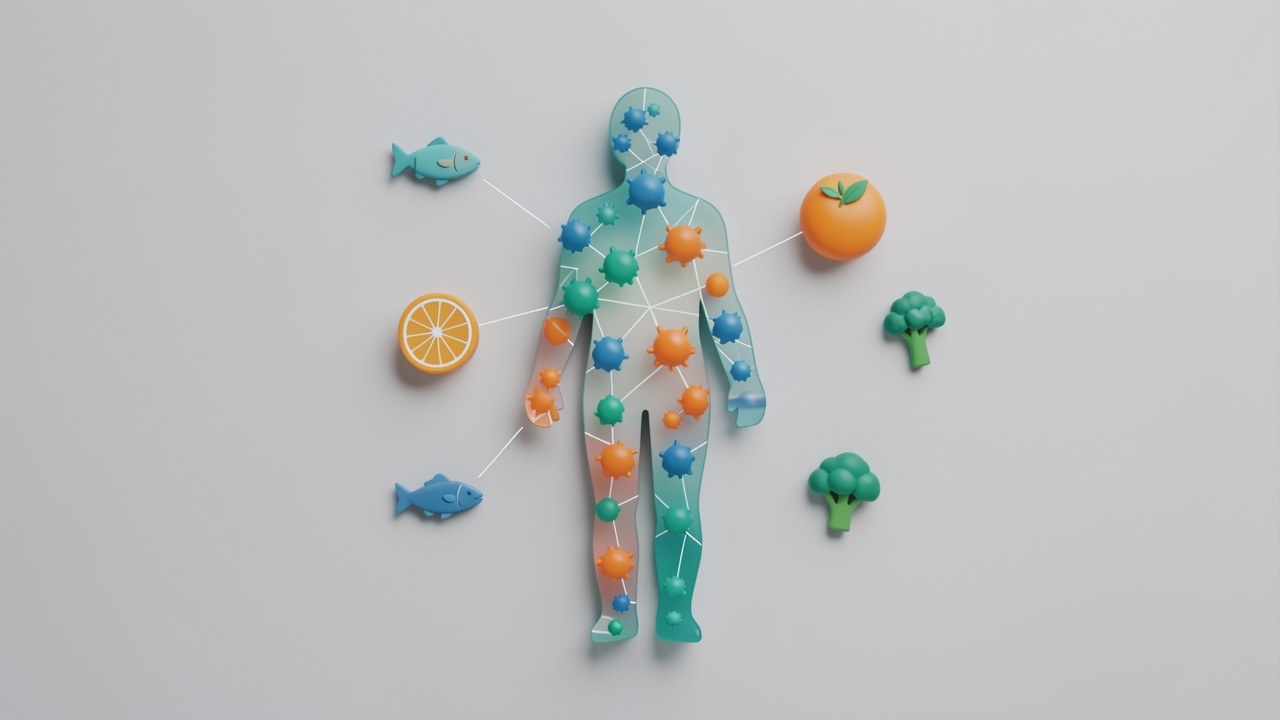
The Immune System: A Quick Overview
Your immune system is a complex network of cells, tissues, and organs that work together to defend against pathogens like bacteria and viruses. It has two main branches: innate immunity, which provides immediate, non-specific defenses, and adaptive immunity, which develops targeted responses after exposure to specific threats.
Nutrition plays a foundational role in supporting both branches. As a peer-reviewed review explains, diet and nutrition have a significant impact on immune function, with nutrients and bioactive compounds modulating both innate and adaptive immunity. An adequate supply of essential nutrients is required for the development and maintenance of a competent immune system.
- Innate immunity: physical barriers, white blood cells like phagocytes, and inflammatory responses.
- Adaptive immunity: B and T lymphocytes that remember specific pathogens.
- Nutrient deficiencies can impair immune development and function.
Sources: Food Science & Nutrition (PMC)
Inflammation and Immune Response
Inflammation is a normal immune response that helps isolate and destroy threats, but chronic inflammation can be harmful. Dietary patterns can influence inflammatory markers in the body. Research indicates that a plant-based diet rich in vegetables, whole grains, and fruits has been shown to lower inflammatory biomarkers. This is one way diet can help regulate immune activity rather than simply 'boost' it.
Certain nutrients have direct anti-inflammatory and immune-modulating effects. For example, vitamin C supports both adaptive and innate immune cellular functioning, including the differentiation and proliferation of B and T cells, and acts as an antioxidant. Antioxidants like vitamins C and E help destroy free radicals, which may otherwise contribute to inflammation and cellular damage.
- Chronic inflammation is linked to various health issues.
- Plant-based eating patterns are associated with lower inflammatory biomarkers.
- Antioxidant nutrients help neutralize free radicals, supporting immune response.
Sources: Food Science & Nutrition (PMC), Physicians Committee for Responsible Medicine (PCRM)
The Gut–Immune Axis: Why Digestion Matters
Your gut hosts a vast community of microorganisms—the gut microbiota—that interacts closely with the immune system. Dietary habits shape the gut microbiota, which in turn modulates personalized immune responses. A diet high in fiber from fruits, vegetables, and whole grains promotes the growth of beneficial gut bacteria, enhancing immune health.
The gut is clearly a major immune organ. Some research suggests that formula-fed infants may have more diverse gut microbiota but less immune regulation, though evidence is limited. This points to the idea that dietary patterns established early in life could have lasting influences on immune processes.
- Fiber-rich foods support beneficial gut bacteria.
- Gut microbiota interacts with immune cells to help regulate responses.
- Early-life diet may have lasting influences on immune function.
Sources: Physicians Committee for Responsible Medicine (PCRM), Journal of Cellular Signaling (as per DOI prefix)
Antioxidants and Oxidative Stress
Oxidative stress occurs when free radicals—unstable molecules—outnumber antioxidants in the body, potentially damaging cells and contributing to inflammation. Antioxidants neutralize free radicals, protecting immune cells and supporting their function. Many nutrients act as antioxidants, including vitamins C and E, beta-carotene, and various plant compounds.
Beta-carotene, found in orange and yellow vegetables, is a powerful antioxidant that can reduce inflammation and boost immune function by increasing disease-fighting cells in the body. Citrus fruits, berries, leafy greens, nuts, and seeds are rich sources of these beneficial compounds. Including a variety of these foods in your diet helps maintain a balance that supports immune health.
- Antioxidants protect cells from free radical damage.
- Beta-carotene may increase disease-fighting cells.
- Dietary sources include citrus, berries, leafy greens, and nuts.
Sources: Food Science & Nutrition (PMC), Physicians Committee for Responsible Medicine (PCRM)
How Nutritional Deficiencies Impair Immunity
A lack of essential nutrients can hinder the immune system's ability to function properly. Inadequate nutrition can impair immune system development and lead to immune incompetence. For example, zinc is a mineral that helps boost white blood cells, which defend against invaders. A deficiency in zinc can weaken this defense.
Vitamin D also plays a role: supplementation has been found safe in prevention of upper respiratory infections and influenza, and may reduce the risk of viral infections by reducing production of proinflammatory compounds. However, too much zinc can inhibit immune function, highlighting the importance of balance rather than mega-dosing.
- Deficiencies in nutrients like zinc and vitamin D can impair immune responses.
- Vitamin D supplementation may help prevent respiratory infections.
- Excess intake of some nutrients can be harmful—balance matters.
Sources: Food Science & Nutrition (PMC), Physicians Committee for Responsible Medicine (PCRM), Healthline
The Role of Overall Dietary Patterns
While individual nutrients are important, overall dietary patterns matter more than any single 'superfood.' A balanced diet rich in vegetables, whole grains, fruits, and healthy fats supports immune function. Plant-based diets, in particular, have been associated with lower inflammatory biomarkers and may enhance immune defenses.
Research suggests that vegetarians often have more effective white blood cells compared to nonvegetarians, likely due to higher intake of vitamins and lower intake of fat. Limiting dietary fat also helps strengthen immune defenses, and high-fat diets may alter the gut microbiota that aid in immunity. The Mediterranean diet, which emphasizes plant foods, olive oil, and fish, may also have positive effects on white blood cell counts in at-risk adults.
- Plant-based patterns reduce inflammation and support immunity.
- Limiting dietary fat strengthens immune defenses.
- The Mediterranean diet may improve immune markers in some populations.
Sources: Food Science & Nutrition (PMC), Physicians Committee for Responsible Medicine (PCRM), Healthline
What the Evidence Says: Study Findings
Current research confirms that diet can influence immune function, but the evidence is nuanced. Human studies show that specific nutrients and dietary patterns affect immune outcomes, yet responses vary by individual. For instance, personalized diets based on gut microbiota profiles were more effective in controlling postprandial glucose levels than standard dietary advice; whether this extends to immune outcomes remains to be studied.
Healthy lifestyle factors—such as regular exercise, not smoking, managing stress, getting recommended vaccines, moderating alcohol, managing weight, and getting proper sleep—also support immune function. The field of immunonutrition is growing, with research exploring how foods and dietary patterns modulate immune system responses.
- Dietary patterns and gut microbiota influence immune responses.
- Personalized diet approaches may offer benefits.
- Lifestyle factors work alongside nutrition to support immunity.
Sources: Brown University Health, Frontiers, Journal of Cellular Signaling (as per DOI prefix)
The Bottom Line
Your diet provides the building blocks your immune system needs to function optimally. Rather than relying on a single 'immune-boosting' food, focus on an overall pattern that includes a variety of nutrient-dense foods, plenty of fiber, healthy fats, and adequate protein.
As research evolves, it's clear that a balanced diet, along with good sleep, regular physical activity, and stress management, is a key way to support your immune system.
Sources: Brown University Health, Healthline
Frequently asked questions
Does being overweight affect immunity?
Yes. Obesity has been linked to an increased risk for influenza and other infections such as pneumonia. High-fat diets and excess body fat may also alter the gut microbiota that aid in immunity. Maintaining a healthy weight through diet and exercise is one way to support immune function.
Sources: Physicians Committee for Responsible Medicine (PCRM)Is there a specific diet that is best for immunity?
No single 'best' immune diet exists, but plant-based eating patterns, such as the Mediterranean diet, are associated with lower inflammation and better immune markers. A balanced diet rich in fruits, vegetables, whole grains, lean proteins, and healthy fats, while limiting processed foods and excess fat, supports immune function. Variety is key to ensure you get the range of nutrients your immune system needs.
Sources: Food Science & Nutrition (PMC), Physicians Committee for Responsible Medicine (PCRM), HealthlineSources
- Common foods for boosting human immunity: A review — Food Science & Nutrition (PMC)
- Foods To Boost the Immune System — Physicians Committee for Responsible Medicine (PCRM)
- Foods to Boost Your Immune System — Brown University Health
- 15 Foods That Boost the Immune System: Citrus, Bell Peppers & More — Healthline
- Immunonutrition: The Role of Foods, Functional Ingredients and Dietary Patterns in Immune System Modulation — Frontiers
- Gut microbiota-immunity interaction and personalized immune response — Journal of Cellular Signaling (as per DOI prefix)