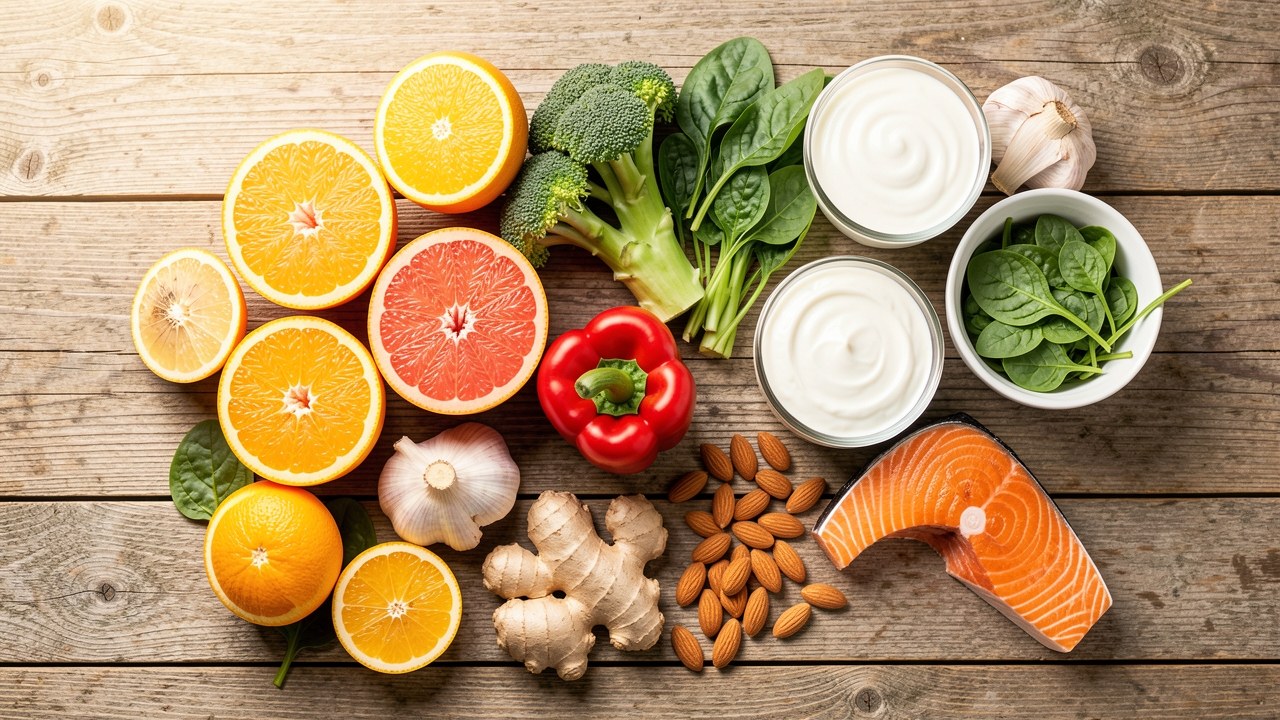
What Does 'Immune-Boosting' Actually Mean?
When people talk about "immune-boosting foods," they often imply that a specific fruit, spice, or supplement can quickly strengthen your defenses against illness. The reality is more nuanced: the immune system is a complex network of cells, tissues, and organs that defends the body against harmful microbes, including bacteria, viruses, and parasites. It is not a single switch that can be flipped.
Instead of "boosting" immunity to supraphysiological levels, the scientific goal is to support normal immune function. This means providing the nutrients that immune cells need to develop, communicate, and respond effectively. A deficiency in key vitamins or minerals can impair immune responses, while adequate nutrition helps maintain the system's readiness. But no food acts as a magic shield against infection.
Sources: Food Science & Nutrition (Wiley), CU Anschutz Health and Wellness Center
nutrition and immune function
Your immune system has two main branches: innate immunity, which provides rapid, non-specific defenses, and adaptive immunity, which develops specific responses and memory. Both branches depend on a steady supply of nutrients from your diet.
Research shows that the immune system is particularly sensitive to nutritional status. For example, a study noted that a diet rich in fruits and vegetables was associated with better antibody responses to a pneumococcal vaccine, suggesting improved immune function. This reinforces the idea that overall dietary patterns matter more than isolated "superfoods."
Sources: Food Science & Nutrition (Wiley), Current Opinion in Food Science
Foods with Strong Evidence for Immune Support
While no single food is a cure-all, several are commonly cited by dietitians and researchers for their nutrient profiles that support immune health. Here are some of the foods most frequently highlighted:
- Citrus fruits (oranges, grapefruits, lemons) – rich in vitamin C, which supports the production and function of white blood cells.
- Bell peppers – also high in vitamin C, with a single red bell pepper containing more than an orange.
- Spinach – packed with vitamin C, beta-carotene, and antioxidants that may support immune responses.
- Broccoli – provides vitamins A, C, and E, along with fiber and antioxidants.
- Garlic – contains allicin, a compound linked to enhanced white blood cell activity in laboratory settings.
- Ginger – has anti-inflammatory and antioxidant properties and may help ease nausea.
- Turmeric – contains curcumin, which has anti-inflammatory and antioxidant effects.
- Yogurt with live active cultures – may support a healthy gut microbiome, which is connected to immune regulation.
- Almonds – a source of vitamin E, a fat-soluble antioxidant that is absorbed better when eaten with fat (which almonds provide naturally).
- Fatty fish (salmon, mackerel, sardines) – provide omega-3 fatty acids, which have anti-inflammatory effects.
Nutrients that matter: vitamins, minerals,
Beyond specific foods, several nutrients play well-documented roles in immune maintenance. Here’s a snapshot of the key players:
- Vitamin C – promotes the production and function of white blood cells; found in citrus, bell peppers, strawberries, and broccoli.
- Vitamin E – a fat-soluble antioxidant that protects cell membranes; found in almonds, sunflower seeds, and spinach.
- Vitamin A – supports the integrity of mucosal barriers (like the gut lining); found in sweet potatoes, carrots, and leafy greens.
- Zinc – crucial for immune cell development and communication; found in oysters, beef, pumpkin seeds, and chickpeas.
- Selenium – supports antioxidant defenses and immune responses; found in Brazil nuts, seafood, and eggs.
- Iron – essential for immune cell proliferation and function; found in red meat, beans, and fortified cereals.
Sources: Cleveland Clinic, Nutrients (MDPI)
How to Build an Immune-Supportive Diet
Rather than obsessing over any single food, aim for a balanced, varied diet that includes plenty of colorful fruits and vegetables, whole grains, lean proteins, and healthy fats. The Mediterranean diet and other anti-inflammatory eating patterns are often recommended because they emphasize these nutrient-dense foods while reducing processed items and refined sugars.
To put this into practice, try to include a serving of vitamin C–rich produce at each meal, choose fatty fish at least twice a week, and incorporate fermented foods like yogurt to support gut health. Keep in mind that how you prepare food matters: some nutrients, like vitamin C, are sensitive to heat and water, so steaming or eating raw can help preserve them.
misconceptions
You’ve likely seen claims that certain foods can "prevent colds" or "cure flu"—these are oversimplifications. The evidence does not support that any single food can supercharge immunity to the point of preventing illness.
Another misconception is that taking high doses of vitamins (like vitamin C or zinc) at the first sign of a cold will stop symptoms. While some nutrients play roles in immune function, the most robust effects come from maintaining adequate levels over time, not from acute mega-dosing.
Finally, remember that diet is just one pillar. Sleep, regular physical activity, stress management, and vaccinations are equally important for a well-functioning immune system.
Sources: Cleveland Clinic, CU Anschutz Health and Wellness Center
How to Use This Guide
This page is your starting point for understanding the connection between nutrition and immunity. Each section above offers a broad overview; from here, you can explore deeper guides on specific foods, individual nutrients, the underlying science, and practical meal planning.
Use the FAQ below to address common questions, and visit the linked resource pages for more detailed, evidence-based information. Remember, this content is for educational purposes and is not a substitute for personalized advice from a healthcare professional, especially if you have underlying health conditions or concerns.
Sources: Cleveland Clinic
Frequently asked questions
Can any food really boost your immune system?
No individual food can dramatically 'boost' your immune system to prevent illness. Instead, a balanced diet rich in essential nutrients supports normal immune function. For example, adequate intake of vitamin C, zinc, and other nutrients helps immune cells work properly, but this is part of overall health—not a quick fix. Think of nutrition as groundwork, not a shield.
Sources: Cleveland Clinic, CU Anschutz Health and Wellness CenterWhat is the difference between supporting immunity and curing illness?
Supporting immunity means providing the nutrients your immune system needs to function normally, which may help you stay healthy and recover from minor illnesses. Curing illness, on the other hand, implies directly eliminating a disease or pathogen, which is beyond the role of nutrients. No food can cure an infection or replace medical treatment.
Sources: Food Science & Nutrition (Wiley), CU Anschutz Health and Wellness CenterIs it better to get nutrients from food or supplements?
Food is generally the preferred source because nutrients are accompanied by other beneficial compounds like fiber and antioxidants, and they are often better absorbed in a food matrix. Supplements can help address deficiencies, but they are not a substitute for a healthy diet. Always consult a healthcare provider before starting any supplement regimen.
Sources: Cleveland ClinicHow quickly can dietary changes affect immune health?
There is no precise timeline because immune function is influenced by many factors beyond diet, such as sleep and stress. Changes in nutrient status can take weeks to months to reflect in immune markers. Consistent, long-term eating patterns matter more than short-term adjustments.
Sources: Cleveland ClinicSources
- 12 Foods That Help Boost Your Immune System — Cleveland Clinic
- Common foods for boosting human immunity: A review — Food Science & Nutrition (Wiley)
- The Truth About Immune-Boosting Foods: What Really Works? — CU Anschutz Health and Wellness Center
- Foods to deliver immune-supporting nutrients — Current Opinion in Food Science
- Boosting Immunity Through Nutrition and Gut Health: A Narrative Review — Nutrients (MDPI)