Why vitamin D matters for immune function
Vitamin D is a fat-soluble vitamin that plays several important roles in the body. One of its key functions is regulating calcium and phosphate levels, which are essential for healthy bones. But vitamin D also influences the immune system, helping to modulate cell growth, neuromuscular function, and inflammation. These effects contribute to the body's natural defenses.
While the exact mechanisms are still being studied, researchers have observed that vitamin D receptors are present on many immune cells, suggesting it helps the immune system respond appropriately to challenges. Maintaining adequate vitamin D levels is considered important for overall health, including immune function.
- Vitamin D promotes calcium absorption in the gut, supporting normal bone mineralization.
- It has roles in reducing inflammation and modulating immune and neuromuscular function.
- Vitamin D is produced when ultraviolet rays from sunlight hit the skin, and it is also found in a few foods and dietary supplements.
Sources: Office of Dietary Supplements, National Institutes of Health
How much vitamin D do you need?
The Recommended Dietary Allowance (RDA) for vitamin D is based on maintaining bone health and normal calcium metabolism. For adults up to age 70, the RDA is 600 IU (15 mcg) per day; for those over 70, it increases to 800 IU (20 mcg) per day. Infants up to 12 months have an Adequate Intake of 400 IU (10 mcg) daily.
Your body can also synthesize vitamin D when your skin is exposed to ultraviolet B (UVB) rays from the sun. However, many factors affect how much vitamin D you produce, making it challenging to rely on sun exposure alone, especially in winter or for people with darker skin.
Sources: Office of Dietary Supplements, National Institutes of Health, GoodRx, Nebraska Medicine
Top food sources of vitamin D
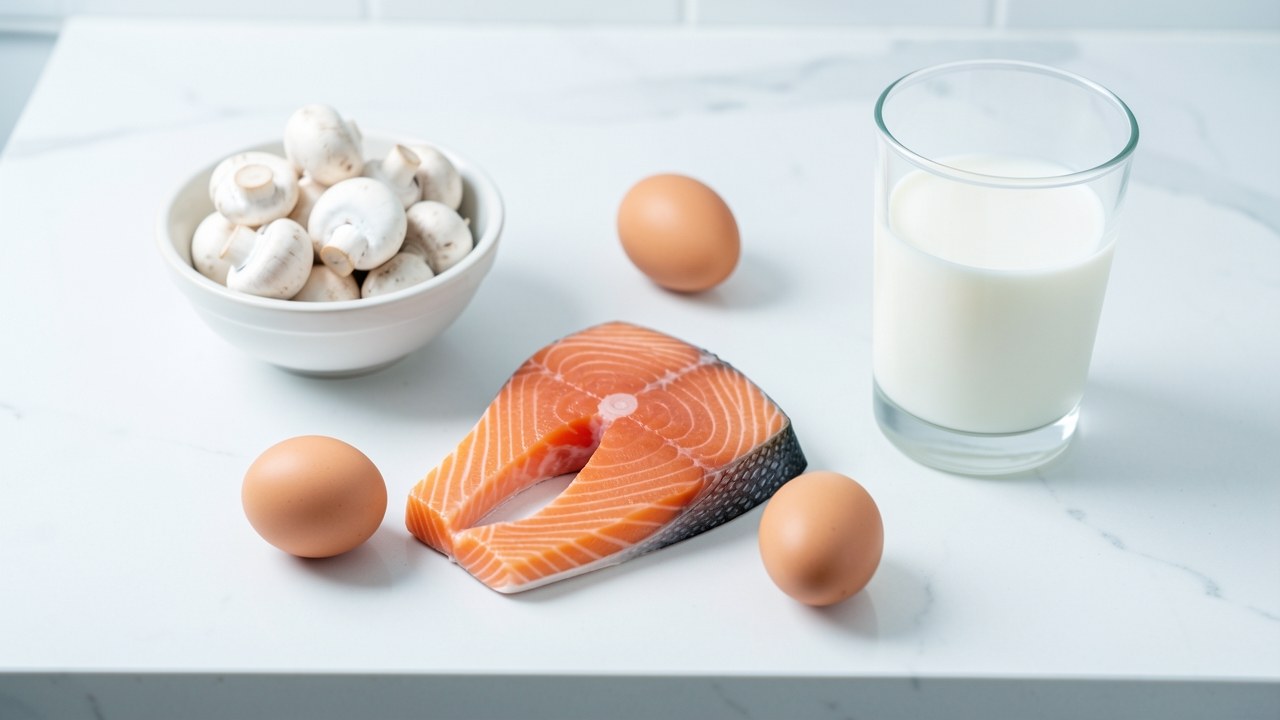
Very few foods are naturally rich in vitamin D. The best natural sources are fatty fish and fish liver oils. For example, a 3-ounce serving of cooked sockeye salmon provides about 570 IU, and rainbow trout offers around 645 IU. Cod liver oil is particularly concentrated, with roughly 450 IU per teaspoon. Other animal sources include beef liver (42 IU per 3 ounces) and egg yolks (40–50 IU per yolk).
Many foods in the American diet are fortified with vitamin D. Almost all cow's milk in the United States is voluntarily fortified with about 120 IU per cup. Plant-based milk alternatives, such as soy, almond, and oat milks, are often fortified similarly, but amounts vary—typically 110–140 IU per cup. Some ready-to-eat breakfast cereals also contain added vitamin D, providing roughly 80–145 IU per serving, depending on the brand.
Mushrooms can provide vitamin D2 when exposed to ultraviolet light. For example, UV-treated maitake mushrooms may contain substantial amounts, sometimes over 1,000 IU per 100 grams, but ordinary store-bought mushrooms grown in the dark contain little unless they've been treated.
- Fatty fish: salmon, trout, tuna, mackerel
- Cod liver oil (concentrated source)
- Beef liver and egg yolks (smaller amounts)
- Fortified milk, plant-based milks, and some breakfast cereals
- UV-exposed mushrooms
| Food | Serving | Vitamin D (IU) |
|---|---|---|
| Cod liver oil | 1 teaspoon | 450 |
| Cooked sockeye salmon | 3 ounces | 570 |
| Rainbow trout | 3 ounces | 645 |
| Fortified cow's milk | 1 cup | 120 |
| Fortified plant-based milk | 1 cup | 110–140 |
| Beef liver | 3 ounces | 42 |
| Egg yolk | 1 yolk | 40–50 |
| Fortified breakfast cereal | 1 serving | 80–145 |
Sources: Office of Dietary Supplements, National Institutes of Health, Schiff Vitamins, GoodRx, Nebraska Medicine
Factors that affect vitamin D absorption
Vitamin D is fat-soluble, meaning it is absorbed better when consumed with dietary fat. This is an important consideration, as eating vitamin D-rich foods alongside a source of fat can enhance absorption.
Certain individuals are more prone to vitamin D deficiency due to factors that affect absorption or synthesis. These include having darker skin, being an older adult who is often indoors, carrying excess body weight (obesity), or having conditions that impair fat absorption, such as celiac disease or inflammatory bowel disease. Sun exposure also varies with geographic location, season, and sunscreen use, all of which influence how much vitamin D your skin produces.
If you fall into any of these categories, it may be worth discussing your vitamin D status with a healthcare provider. They can perform a blood test and offer personalized guidance.
- Fat in your diet improves absorption.
- Darker skin and older age may reduce skin synthesis.
- Obesity and malabsorption disorders are risk factors for deficiency.
Sources: GoodRx, Nebraska Medicine
Vitamin D deficiency: signs and risk factors
Vitamin D deficiency can be difficult to pinpoint because its symptoms are often vague and may overlap with other conditions. Some people report fatigue, poor sleep, bone or muscle aches, low mood, hair loss, or frequent infections. However, these signs can have many causes, and the only reliable way to know if you're deficient is through a blood test measuring 25-hydroxyvitamin D [25(OH)D].
The National Academies of Sciences, Engineering, and Medicine has defined sufficient levels as 50 nmol/L (20 ng/mL) or higher for most people, with an increased risk of deficiency at levels below 30 nmol/L (12 ng/mL). However, research suggests that optimal levels may vary by life stage, race, and health outcome, so your healthcare provider can interpret what is right for you.
If you suspect a deficiency, seek professional advice before self-treating with high-dose supplements, as excessive intake can be harmful.
- Measuring 25(OH)D in your blood is the standard way to assess status.
- A level of at least 50 nmol/L (20 ng/mL) is generally considered sufficient.
- Risk groups include people with darker skin, older adults who are often indoors, people with obesity, and those with malabsorption disorders.
Sources: Office of Dietary Supplements, National Institutes of Health, GoodRx, Nebraska Medicine
Supplements vs. food: what to consider
Getting vitamin D from food and sensible sun exposure is generally safe, as the body regulates its own synthesis. However, many people find it challenging to meet their needs through diet alone because few foods naturally contain the vitamin. In such cases, a supplement may be helpful.
When choosing a supplement, keep in mind that vitamin D can be toxic if taken in excessive amounts. Consuming too much from supplements may lead to hypervitaminosis D, causing nausea, vomiting, confusion, excessive thirst, and an increased risk of kidney stones. Therefore, it's important to follow dosing guidelines and not exceed the tolerable upper intake level without medical supervision.
Both food and supplements can help you reach your target, but they are not interchangeable in all ways. Food provides other nutrients and often facilitates absorption with fat. Supplements offer a consistent dose but require careful dosing. Your healthcare provider can help you decide what fits your needs.
- Food sources provide vitamin D along with other nutrients.
- Supplements offer a reliable dose but require careful attention to amount.
- Excessive vitamin D from supplements can be toxic; always follow recommended dosages.
Sources: Office of Dietary Supplements, National Institutes of Health, Nebraska Medicine, HealthPartners Blog
Practical tips for getting enough vitamin D
Incorporate fatty fish into your weekly meals, such as salmon, trout, or tuna. These not only provide vitamin D but also healthy omega-3 fats. If you don't eat fish, choose fortified plant-based milks or a fortified cereal for breakfast. Always check nutrition labels, as fortification amounts vary by brand.
When spending time outdoors, aim for moderate sun exposure, but be mindful of skin cancer risks. There is no single recommendation for how much sun is ideal, and it varies by skin tone, location, and season. For many people, a balanced approach includes both food sources and time outdoors, and possibly a supplement during low-sun months.
Consider pairing vitamin D-rich foods with a source of fat, like a salad with avocado or a glass of milk with a meal. This helps your body absorb the fat-soluble vitamin more effectively.
- Eat fatty fish a few times a week.
- Choose fortified dairy or plant milks and cereals.
- Include mushrooms, especially those exposed to UV light, in your diet.
- Seek modest sun exposure when possible, but protect your skin.
- Talk to your doctor about whether a supplement is right for you.
Sources: Office of Dietary Supplements, National Institutes of Health, GoodRx, Nebraska Medicine
Frequently asked questions
Can you get enough vitamin D from food alone?
It is challenging to meet your daily vitamin D requirement through food alone, because only a few foods naturally contain significant amounts. For example, you would need to eat about 3 ounces of cooked sockeye salmon to get nearly all the 600 IU recommended daily for adults under 70. Fortified foods like milk and cereal can help, but most people still fall short of their needs from diet alone. Sun exposure and supplements often fill the gap.
Sources: Office of Dietary Supplements, National Institutes of Health, GoodRxWhat is the best time to take vitamin D?
Because vitamin D is fat-soluble, taking it with a meal that contains fat can enhance absorption. There is no widely agreed 'best time of day' from the available evidence, but consistency matters more than timing. Pick a time that works with your routine and pair it with food.
Sources: Office of Dietary Supplements, National Institutes of HealthAre there risks of getting too much vitamin D?
Yes, excessive vitamin D from supplements can be toxic, leading to nausea, vomiting, confusion, excessive thirst, and an increased risk of kidney stones. This does not typically occur from food or sun exposure, as the body regulates vitamin D production. It's important to avoid high-dose supplements without medical supervision.
Sources: Nebraska Medicine, HealthPartners BlogDoes vitamin D prevent colds or flu?
Some research suggests that vitamin D plays a role in immune function and may help reduce the risk of respiratory infections, but the evidence is not conclusive enough to make definitive recommendations. Observational studies link low vitamin D levels with higher infection risk, but clinical trials have mixed results. Maintaining adequate vitamin D for overall health is reasonable, but it is not a guaranteed way to prevent colds or flu. More high-quality research is needed.
Sources: Office of Dietary Supplements, National Institutes of Health, ISDINSources
- Vitamin D - Health Professional Fact Sheet — Office of Dietary Supplements, National Institutes of Health
- 19 Vitamin D-Rich Foods — Schiff Vitamins
- 13 Best Foods High in Vitamin D — GoodRx
- 9 vitamin D deficiency symptoms (and 11 high vitamin D foods) — Nebraska Medicine
- Foods rich in vitamin D and why it’s important — HealthPartners Blog
- Top 5 Foods With Vitamin D (And Why Your Skin Might Thank You) — ISDIN